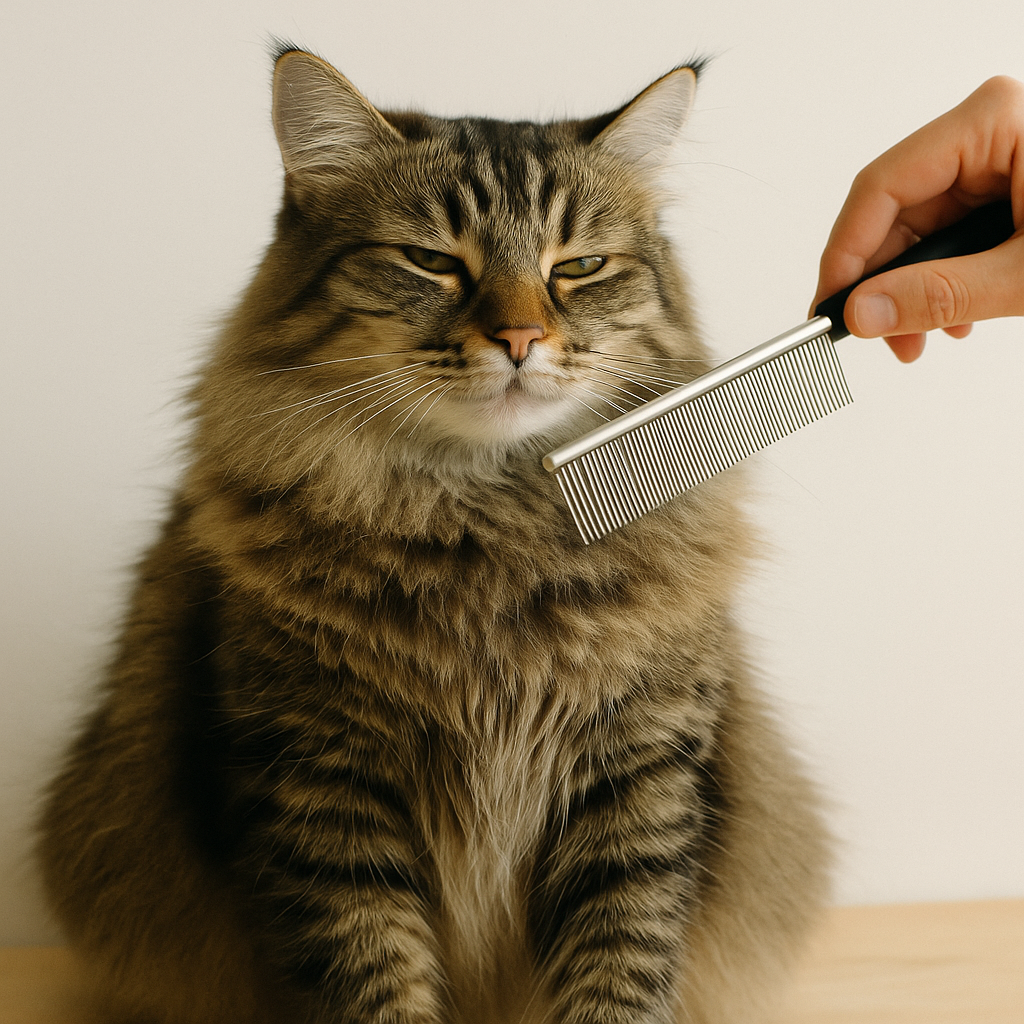
Cats manage a lot of their own grooming. They're efficient at it. The part most owners miss is that "a lot" is not "all" — and the gap between the two is where hairballs, matting, and skin issues develop. This guide covers what a cat's self-grooming doesn't handle and what a short home routine actually looks like in practice.
What cats miss when they groom themselves
The back of the neck, the base of the spine, and behind the ears are areas the cat can't reach easily. On long-haired cats, these spots mat first and mat fast. A cat that is grooming itself constantly but still developing mats or hairballs in certain areas is usually missing these spots.
Cats also swallow a lot of the hair they remove. Regular brushing reduces the amount going into the digestive system — which reduces hairballs. This is the single most practical argument for maintaining a grooming routine even for short-haired cats.
Short-haired cats
A once-weekly brush is usually enough. Use a rubber grooming glove or a soft bristle brush. The goal is to pick up loose hair before it goes down the cat's throat, not to detangle. Most short-haired cats accept this easily if introduced calmly. Keep sessions brief — 3 to 5 minutes.
Long-haired cats
Maine Coons, Persians, Ragdolls, Siberians, and similar breeds need brushing 3 to 4 times a week at minimum. Daily during shedding season. Use a metal wide-toothed comb rather than a brush — it reaches deeper into the coat and doesn't just skim the surface. Start at the ends of the coat and work inward, not the other way around.
The groin, armpits, and behind the ears are the first places to check for tangles. Small tangles can be worked out with fingers before using a comb. If a tangle has become a mat — dense, hard to separate with fingers — don't pull it out. Either use a mat splitter carefully or contact a groomer.
Bathing
Most cats don't need regular baths. There are situations where bathing is appropriate: very dirty coats, skin conditions that require a medicated shampoo (on vet advice), or elderly cats who are no longer grooming effectively. For show cats, bathing is part of the standard preparation routine.
When bathing is needed, use a cat-specific shampoo, keep the water warm but not hot, and minimise how long the session takes. Have towels ready. Blow-drying on a low setting is fine for most cats if introduced gradually.
Nail trimming
Indoor cats need nail trims every 2 to 3 weeks. Outdoor cats wear their nails down more naturally but should still be checked monthly. Use small pet nail scissors or a guillotine-style clipper — not human nail clippers, which can split the nail.
The quick in a cat's nail is visible as a pink area near the base. Cut the clear tip only, well away from the pink. If the cat strongly resists nail trimming, it's worth starting with just one or two nails per session rather than all of them at once. Build up over several sessions.
When grooming reveals a vet issue
Regular grooming gives you a regular look at your cat's skin, coat, and body. Things to report to a vet rather than treat with grooming: bald patches or excessive shedding not related to season, skin redness or flaking, lumps under the skin, discharge around eyes or ears, or a cat that has stopped grooming itself — which can signal pain or illness rather than laziness.
Tools worth having
- Metal comb with wide and narrow teeth — works across all coat lengths
- Slicker brush — useful for long coats between proper comb sessions
- Rubber grooming glove — for short-haired cats who don't enjoy brushes
- Small pet nail scissors — sharp, cat-specific
- Cat-safe ear cleaning solution
The field notes article on cat grooming tools goes into more detail on what to look for in each category.